Your Congregation Is Asking AI Before They Ask You
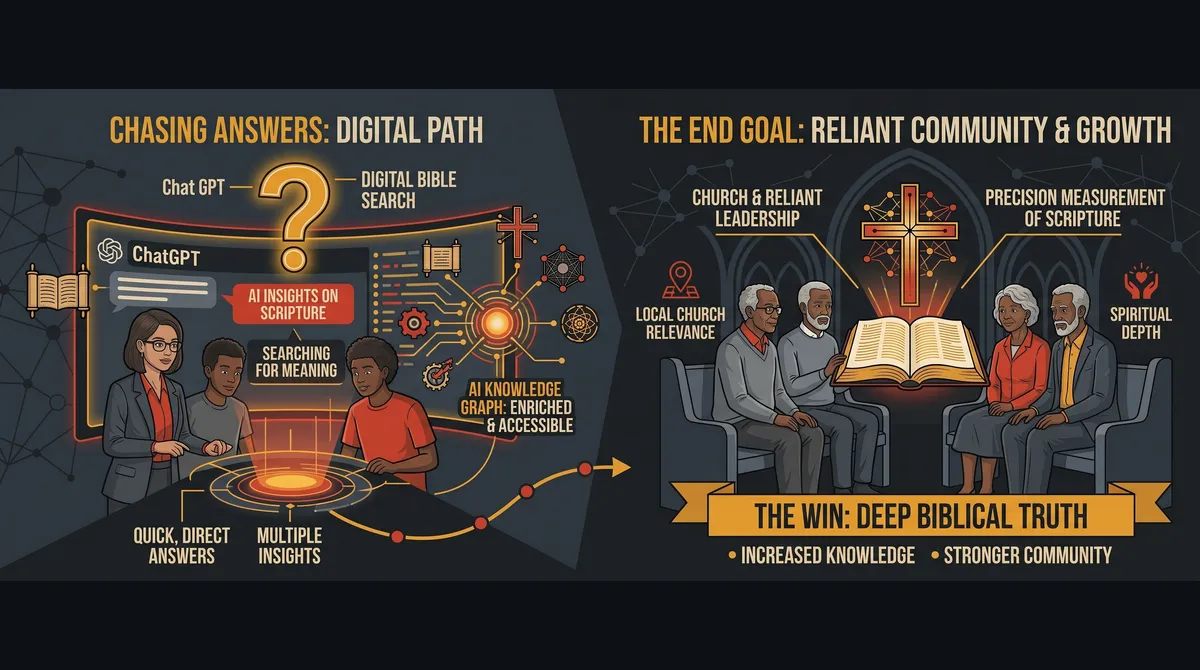
When a family new to your area asks an assistant which churches teach what they believe, an answer gets generated whether or not your church is in it.

6 min read
In short
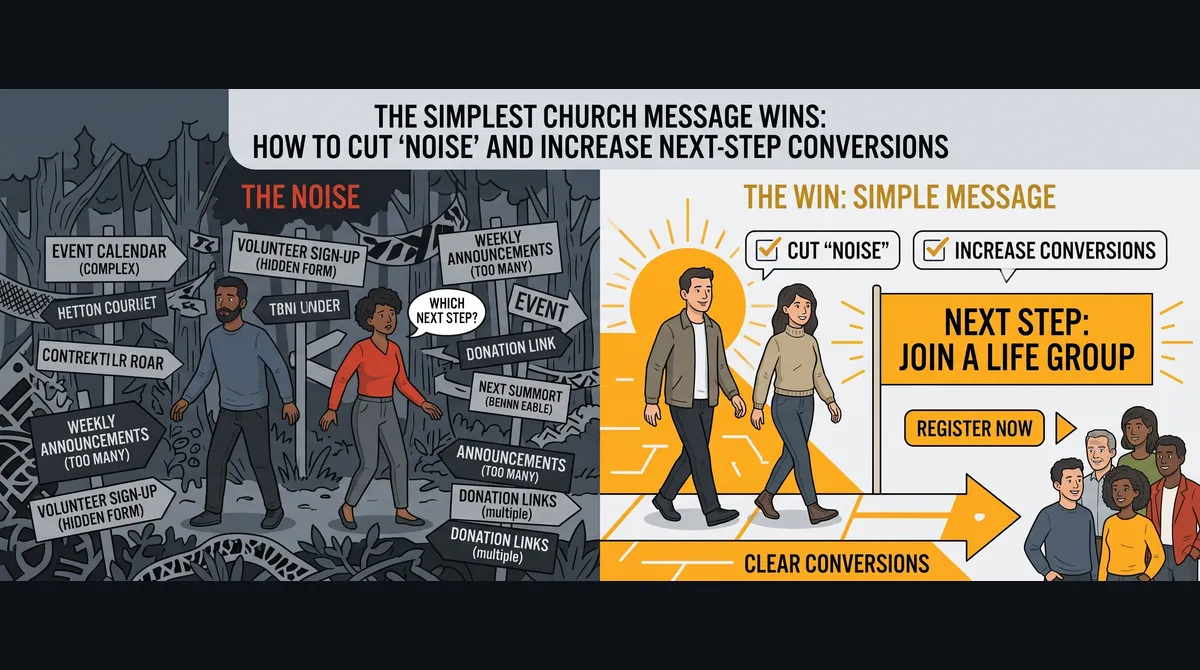
Clarity is not marketing. It is how people find you.
A family relocates. They have children, a tradition they were raised in, and about four minutes of attention on a Tuesday night. They open an assistant and ask which churches near them teach what they grew up with.
Three names come back. Not ten. Three.
That is the shape of the change. SOCi's 2026 Local Visibility Index, covering more than 350,000 locations, found ChatGPT recommends 1.2 percent of local organizations, Perplexity 7.4 percent, and Gemini 11 percent, against 35.9 percent for Google's traditional three-pack. The list got shorter and the choosing moved.
And it is uneven in a way that matters here. Whitespark's 2026 study of 540 local queries found AI answers appear on only about 15 percent of simple transactional searches, where the map still dominates, but on 92 percent of informational searches and 97 percent of hybrid ones.
Read that against how people actually search for a church. Somebody who already knows your name still finds you the old way. The family still deciding does not. The searches AI has taken over are precisely the ones where a newcomer is choosing.
“Write the vision and make it plain on tablets, so he may run who reads it.”
Habakkuk 2:2
Making the vision plain used to mean a sign, a bulletin, and a clear website. It now also means writing it in a form a machine can read back accurately to someone who has never heard of you.
An answer already exists, and you have not read it
Take four minutes and run these three prompts, in a logged-out browser window.
- What churches are in [your city]?
- Which churches near [your city] are [your denomination or tradition]?
- Tell me about [your church's exact name].
Read what comes back without defending it.
Most congregations find one of three things. The church is not named at all. The church is named with details that are years out of date, an old service time, a former pastor, a campus that closed. Or the church is described in a way nobody on staff would recognize, because the assistant assembled it from a directory listing written in 2017.
Nobody tells you when the answer about your church becomes wrong. It simply starts being given that way.
Why the answer gets it wrong
Because the systems assembling it decline to guess, and most church websites require guessing.
Roughly 77 percent of the sources cited in AI answers about an organization are pages that organization does not own, per Omniscient Digital's review of more than 23,000 citations. Directory listings. Old event pages. A denominational database. A review someone left in 2019.
Meanwhile the actual answers, what you believe, who you serve, when you gather, are frequently on the site but not in a readable form. They are inside a photograph of the welcome banner. Inside a sermon video nobody transcribed. Implied by the design rather than stated in a sentence.
A visitor will infer. A retrieval system will not.
Where it breaks, by organization
| If you lead a | What someone is actually asking | Where it usually fails |
|---|---|---|
| Church | What do you believe and when do you gather | Beliefs written in language only members parse. Service times sit in a graphic |
| Christian school | What is the philosophy of education and who is it for | Admissions details locked in documents. Accreditation stated nowhere in text |
| Nonprofit or ministry | What do you actually do and does the money reach it | Impact described in adjectives rather than numbers. No stated service area |
| Faith-based counseling practice | Do you handle this specific situation, and are you licensed | Credentials in an image. Specialties implied by photography |
| Denominational network | Which congregation near me belongs to this body | Church directory built as a map widget the crawler cannot read |
Same failure in every row. The truth is on the site. It is just not in words.
The plainness test
Five questions. Answer honestly, then fix the one that scores lowest. None of these require a budget.
- Stated. Can a stranger read one paragraph on your site and say what you believe and who you serve, in their own words?
- Current. Are service times, addresses, and leadership names identical on your site, your Google Business Profile, your denominational listing, and every directory that carries you?
- Readable. Are those facts in text, not inside images, videos, or a script?
- Reachable. Open yourdomain.org/robots.txt. Are GPTBot, OAI-SearchBot, Google-Extended, PerplexityBot, ClaudeBot, and Bingbot allowed?
- Corroborated. Does any source other than you describe your congregation accurately on a page a crawler can reach?
Item two catches almost everyone. A service time changed three years ago and updated in two places out of nine is the single most common reason an assistant gives a visitor the wrong hour.
Is this a good use of the budget?
It deserves a straight answer rather than a sales one.
Most of what matters here is free. Reading your robots.txt costs nothing. Writing your beliefs in a plain paragraph costs an afternoon. Making your service times identical across nine listings costs a volunteer one Saturday. Those three actions resolve the majority of the problem for most congregations.
What is not free is citation supply, meaning other credible sources describing you accurately, and that is a slower and more expensive kind of work. For a church, it is also the least urgent, because a congregation that is legible and consistent is already ahead of nearly everyone in its area.
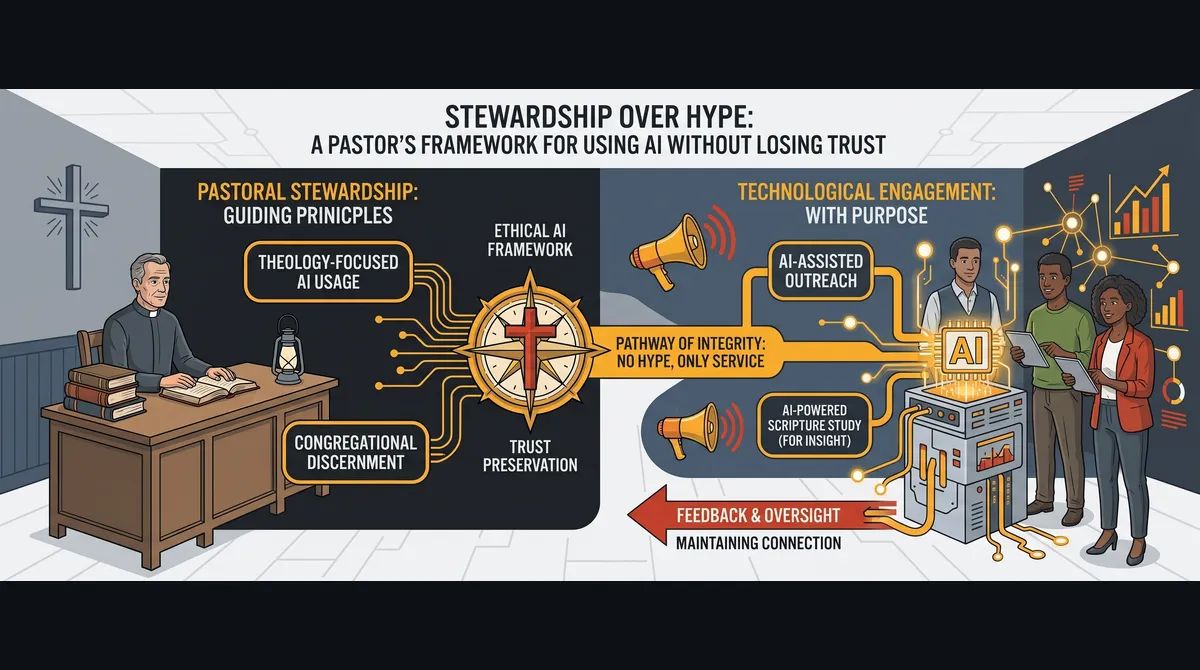
Recommending less when less is right is part of the job. A church does not need a retainer to fix a robots.txt file.
“One who is faithful in a very little is also faithful in much.”
Luke 16:10
Faithfulness in a very little, here, means keeping the service time accurate in the ninth listing that almost nobody checks. That is unglamorous, and it is exactly the detail a machine will read back to a stranger.
One question worth sitting with. If a family two miles away asked an assistant which churches near them teach what your church teaches, and it named three, would yours be one of them? And if it named yours with the wrong service time, who on your team would ever find out?