
Strategy & Leadership6 min read
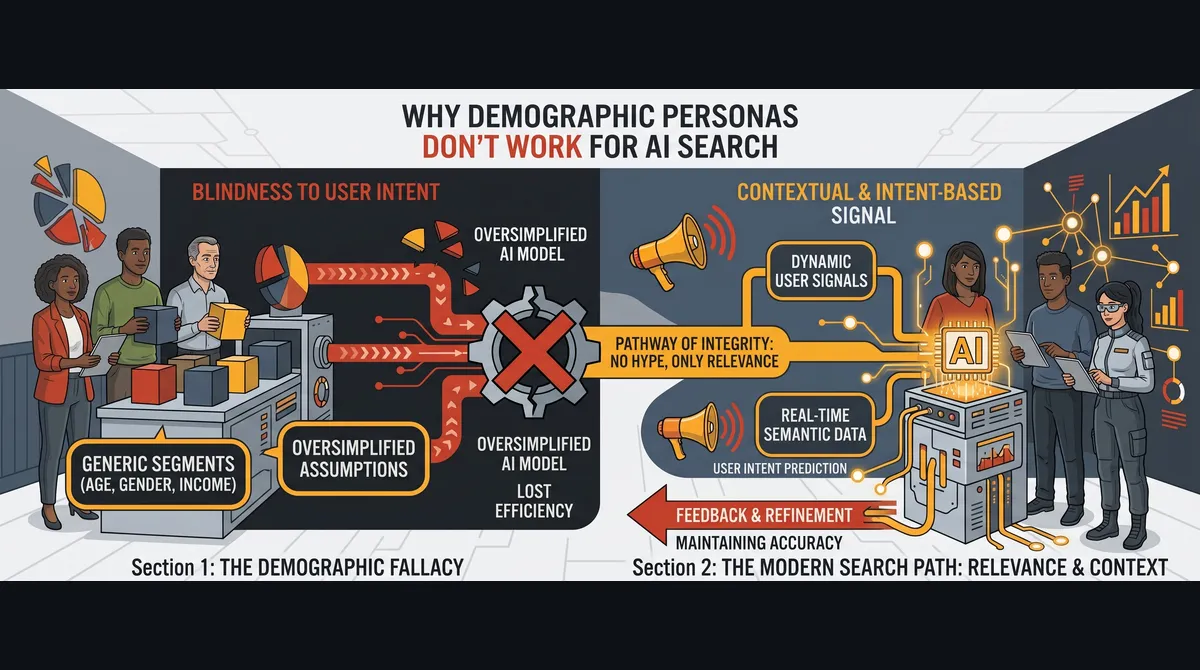
Why Demographic Personas Don’t Work for AI Search
Demographics describe who someone is, not what they'll ask AI. Learn why niche audience research beats standard personas for real AI engine citations.
Usually the offer is fine. What is missing is a clear, agreed answer to one question: who exactly are you talking to? CCG answers it, then plans the campaign around it.
What it is
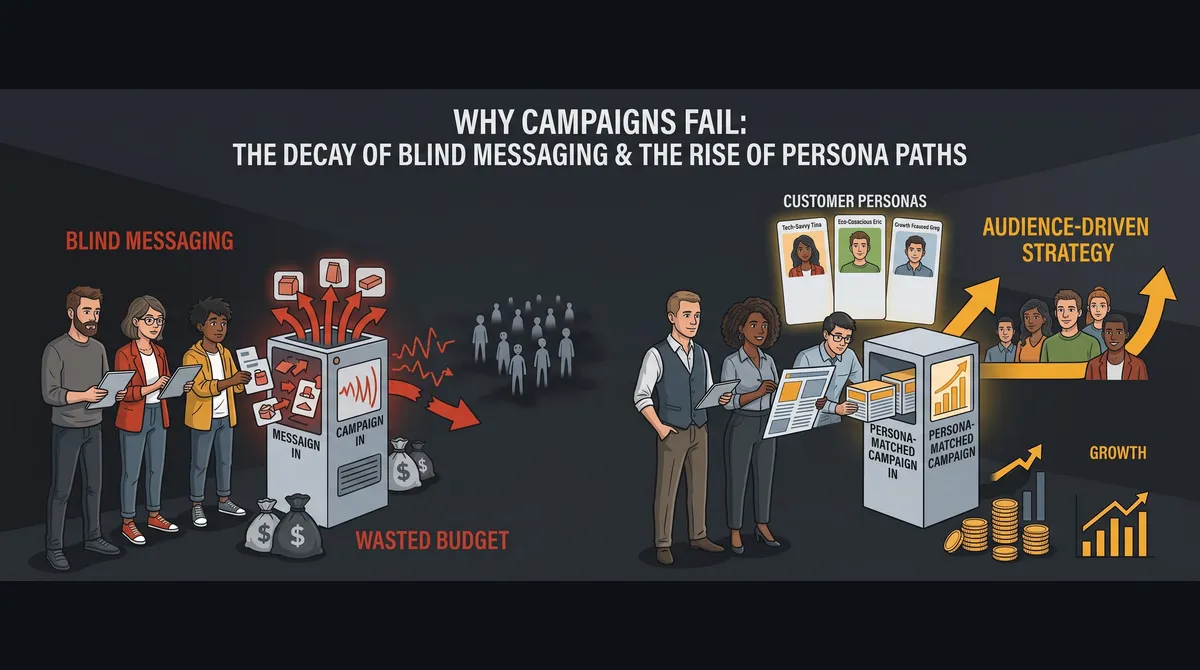
Because when your messaging uses your vocabulary and your buyer uses theirs, the connection never forms. Businesses lose real budget every month reaching people who were never a fit, while missing the ones who would have converted with the right message.
The fix is not a stock photo with a made-up name. It is a documented profile built from interviews, behavior data and competitive research, ready to brief every campaign, every piece of content and every ad that follows. Research closes the vocabulary gap before a dollar is spent, which is much cheaper than closing it after.
Not a demographic segment, and not a job title on a spreadsheet. A complete persona covers eight things, and thin persona work usually skips the last one:
Five steps, run in order. The interview and validation steps produce the insights worth having, so neither gets shortened.
| Topic | B2C persona | B2B persona |
|---|---|---|
| Who it describes | One consumer | A decision maker plus the stakeholders who influence the same purchase |
| What drives the buy | Personal want and identity | A metric they are measured on, and the risk of getting it wrong |
| Research source | Broad consumer surveys | Sales interviews, customer interviews and deal cycle analysis |
| Decision length | Minutes to days | Weeks to quarters, with approval gates |
| Cost of getting it wrong | A wasted impression | A full sales cycle spent on a lead that was never going to close |
Campaign planning is everything that happens before anything launches. Done properly it is six parts that depend on each other. Skip one and the campaign underperforms in a way that is hard to diagnose later.
No. Most businesses that think they have a campaign plan actually have a publishing schedule. The calendar serves the plan; it cannot replace it.
| Topic | Content calendar | Campaign plan |
|---|---|---|
| Question it answers | What publishes, and when? | Who are you talking to, what problem are you solving, and how will you know it worked? |
| Where it sits | Downstream. It is an output | Upstream. It is the reason the calendar looks the way it does |
| What it decides | Format, channel and publish date | Goal, audience, channel mix, budget split and KPI targets |
| How performance reads | Post-level metrics with no shared context | One scoreboard every asset is measured against |
| What happens without it | Publishing continues on schedule | Budget gets spent, and nobody can say what it bought |
Planning a campaign is one job; carrying it through launch, optimization and reporting is another. You get plain-language reporting at every step: what happened, why it happened and what is being done about it.
Every engagement starts with the audit: a scored baseline across six dimensions, emailed within 1 business day, with no call required.
Strategy & Leadership6 min read
Demographics describe who someone is, not what they'll ask AI. Learn why niche audience research beats standard personas for real AI engine citations.

Strategy & Leadership10 min read
A church grew from 415 to 144,431 in audience using AI-enhanced market research. Here's the exact 4-phase process CCG uses for every client.
Strategy & Leadership5 min read
Marketing persona development is the most common reason campaigns fail. Learn what a real persona includes, what skipping it costs, and how to fix it.
Campaign planning is deciding a campaign’s goal, audience, channels, content, budget and measurement before anything launches. For a small business it matters because a limited budget has no room for waste. A plan points every dollar at one measurable outcome instead of scattering it across tactics that do not connect.
No. Planning applies just as much to organic campaigns built on content, email and search as it does to paid ones. Organic campaigns arguably need it more: there is no ad spend forcing fast feedback, so the structure has to do that job.
Fewer than most people think. A handful of primary personas, researched in depth, beats a long list your team cannot write for. The better move is finding the segments that carry the most value and building real depth there, then adding more only when the first ones are working.
Yes. Every persona profile, journey map, campaign brief and plan is yours to keep. You are not renting access to a strategy; you can hand the documents to your internal team, a future agency partner or a new marketing hire.
You get validated personas, a documented messaging architecture, a channel recommendation, a content plan, a budget split by funnel stage and KPI targets agreed before launch. After launch, CCG follows a written optimization routine and reports what happened, why, and what changes next.
Start with a free GEO Snapshot: your score across six dimensions, three AI engines and three named competitors, emailed within 1 business day.
Nobody can honestly promise an AI placement or a timeline.
What we do promise: your Day 90 GEO Score is measured against your Day 1 baseline, and reported in leads and revenue.