In short
The math of a slow callback
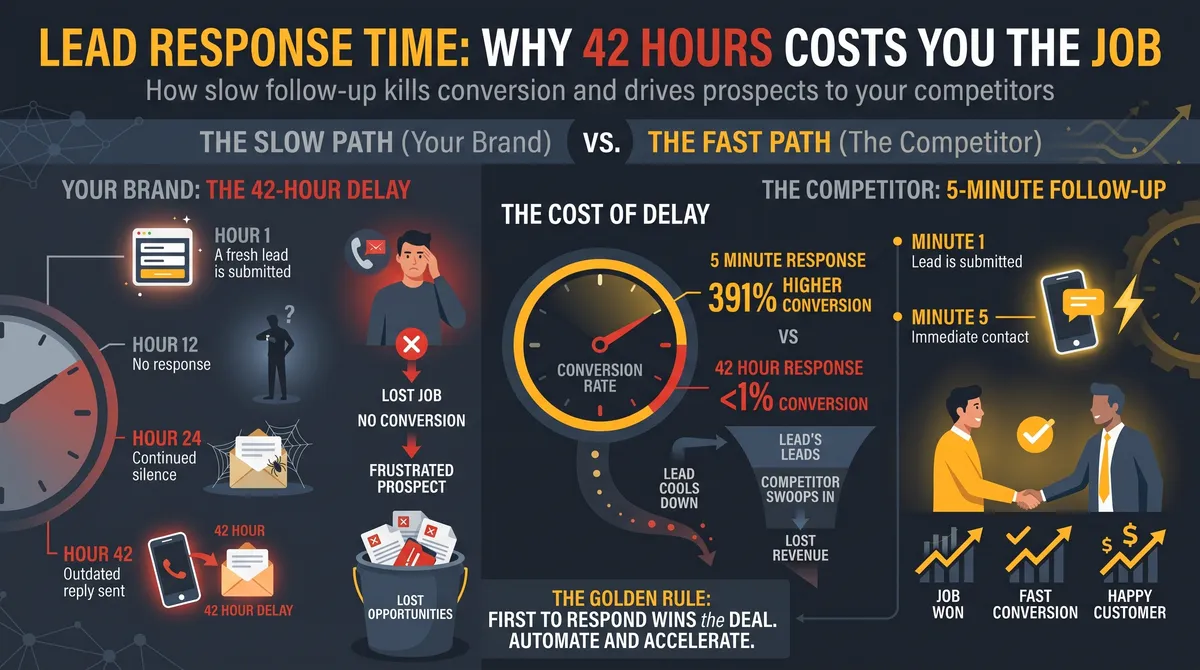
A slow callback costs you the jobs you already paid to win. Every lead carries the full cost of the marketing that produced it, and every hour of silence gives that buyer time to call someone else.
Picture a homeowner whose water heater fails on a Tuesday. On her lunch break she fills out forms on three websites. One company texts her back in two minutes, confirms the problem, and says a technician will call within 15 minutes. The second calls the next morning. The third calls two days later. You already know who gets the job. The other two did not lose on price or quality. They lost on the clock.
You are not alone in this. CallRail found that 62% of small and midsize businesses name lead follow-up and conversion as a top pain point. The problem is common because the fix sits in the gap between marketing and operations, and nobody owns that gap.
Run your own numbers. It takes ten minutes:
- Take last month's total marketing spend and divide it by the number of leads you received. That is your cost per lead.
- Count how many of those leads waited more than one hour for a real response.
- Multiply that count by your cost per lead.
That figure is what you paid for leads that started cooling before you said a word. Most owners have never seen it, and it tends to change the conversation about ad budgets very quickly.
Speed only matters if buyers find you first. See whether ChatGPT, Gemini, and Perplexity recommend your business when buyers ask who to call.
Get My Free AI Visibility Audit
The four leak points
Leads leak in four places: web forms, missed calls, after-hours inquiries, and direct messages. Most businesses have at least two of these open right now.
Web forms
The form sends an email to a shared inbox nobody watches, or straight to the owner's phone while the owner is on a job site. The lead sits. Nobody owns it, so nobody answers it.
Missed calls
Your crew is on a roof and the office line rings out to voicemail. Plenty of callers never leave a message. They simply dial the next name on the list, and you never know they called.
After-hours inquiries
Evenings and weekends are when many homeowners finally have time to deal with the problem. A lead that arrives Friday at 7 p.m. and waits until Monday morning has had a whole weekend to find someone else.
Direct messages
Facebook, Instagram, and Google Business Profile messages often belong to no one. They pile up in apps that only one person logs into, and only sometimes.
Pick the leak you know is worst. That is where your follow-up engine starts.
The 5-minute follow-up engine
A 5-minute follow-up engine answers every lead automatically within minutes, then puts a real person on the phone fast. It has four parts, and all four can run in Make.com and HubSpot without anyone touching a keyboard.
- Instant text. Within a minute of any form, missed call, or message, the lead gets a short, plain text. It confirms you received the request, names the service, and says when a person will call. Example: "Hi [First Name], this is [Name] with [Company]. Got your request about [service]. I will call you within 15 minutes. If text is easier, just reply here."
- Instant email. The same message by email, plus what happens next, a photo of your team, and a link to your reviews. It gives the buyer something to read while they wait, and it keeps your name at the top of their inbox.
- Call routing. During business hours, the new lead triggers a call to whoever is on duty. If they do not answer, it rings the next person. After hours, it books a callback slot for first thing the next morning and tells the buyer exactly when to expect it.
- HubSpot task. Every lead creates a contact record with its source and a task assigned to a named person with a due time. If the task is still open when the due time passes, a manager gets an alert. Nothing sits unowned.
Build the engine once, test it with a fake lead every week, and it works every hour of every day without asking anything of you.
What to automate and what stays human
Automate the speed. Keep the judgment human. That single rule settles almost every decision about where a machine belongs in your follow-up.
| Automate | Keep human |
|---|---|
| First acknowledgment text and email | The first real conversation |
| Routing the lead to the right person | Pricing and scope |
| Creating the CRM record and task | Calming a frustrated or urgent customer |
| Overdue task alerts | Deciding which leads deserve a site visit |
| Check-in messages for leads that go quiet | Anything that sounds like a promise |
An automated text that pretends to be a full conversation breaks trust quickly. Keep the automation honest. It confirms, it sets expectations, and it routes. A person does the talking. Buyers do not mind a fast, clear automated message. They mind being misled about who they are talking to.