Why Are Your Leads Low Quality?
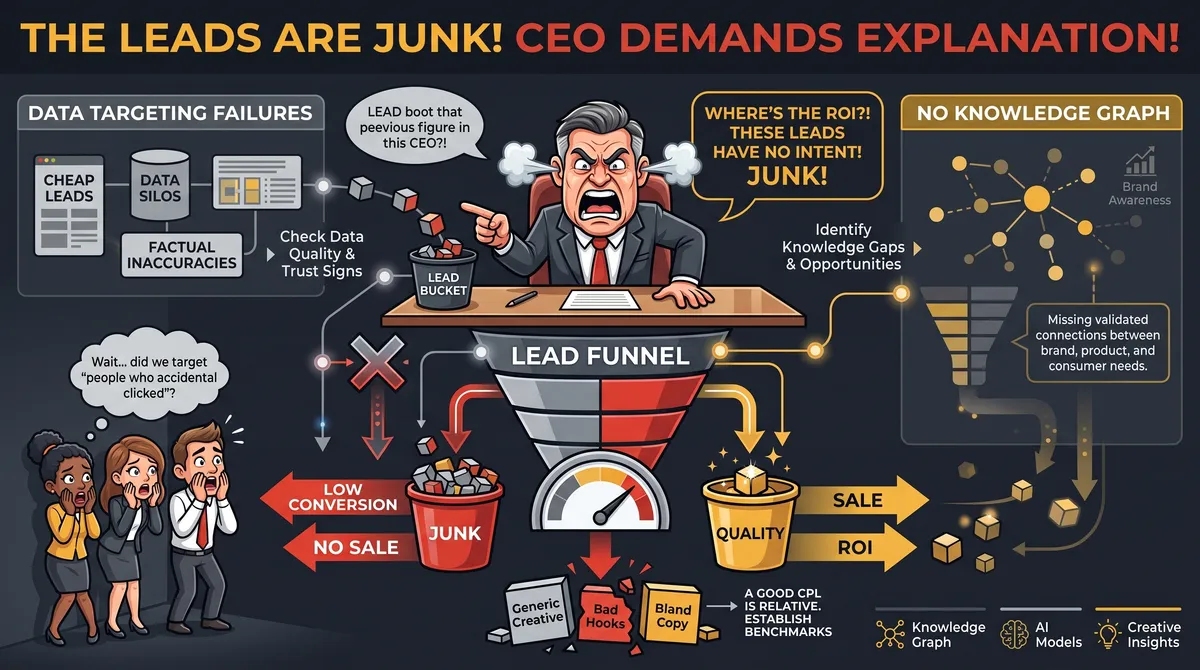
The platform is doing exactly what you asked. It is finding people who fill out forms, because nobody ever told it what a good customer looks like.

5 min read
In short
The platform is learning from the wrong outcome
This is the biggest cause and the most fixable, so it goes first. Four other causes follow, and all of them matter less than this one.
When the only event Meta sees is form submitted, a junk lead and a great lead look identical to it. The system then goes and finds more people who look like everyone who submitted, which is exactly what you asked for and not at all what you wanted.
- Run the Meta Pixel and the Conversions API together. Practitioner consensus treats this as the baseline rather than an upgrade.
- Mark lead outcomes in your CRM. Qualified, booked, closed. Without this step there is nothing to send back.
- Send those outcomes back to the platform so it can learn what a good lead looks like rather than what a submission looks like.
- Optimize toward the deeper outcome once you have enough volume for the system to learn from.
Everything else on this page is worth doing. None of it works as well while the system is still learning from the wrong event.
Five causes, and what each one looks like
Find the row that matches what you are seeing.
| Cause | What it looks like | The fix |
|---|---|---|
| Learning from the wrong outcome | Volume is fine, nobody answers the phone | Send real lead outcomes back through the Conversions API. Fix this first |
| The ad is too broad | Leads from outside your service area, or asking about things you do not do | Name the problem, the service area, and where you can, the price range |
| Nobody is filtered out | Leads who could never afford or qualify for the offer | Say plainly who the offer is not for, inside the ad |
| The form has no friction | High conversion rate, low close rate, people who do not remember submitting | Add one qualifying question that takes a moment of thought |
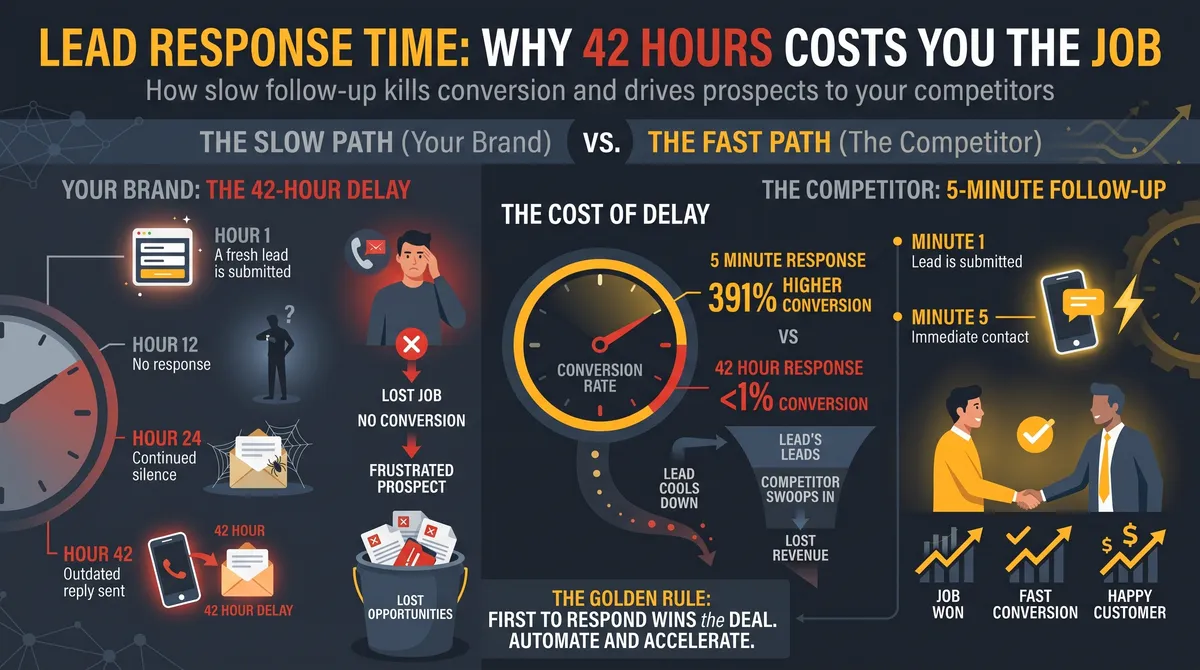
| The follow-up does not match the ad | Leads go cold between submission and first contact | Respond fast, and repeat the ad's exact promise in the first message |
Qualify before the form, not after
Meta's Andromeda system reads your creative to decide who sees it, which means a vague ad attracts vague interest and the targeting problem starts in the copy.
Two-sided messaging works as a filter. Saying plainly who the offer is not for costs you leads you were never going to close.
- Built for practices with three or more providers.
- Projects start at [PRICE FLOOR].
- Serving [SERVICE AREA] only.
Then add one qualifying question to the form. Timeline, budget range, or type of project. Instant forms with prefilled fields make submitting almost effortless, and some people tap through without reading.
Expect fewer leads and better calls. Judge the change by booked appointments, not by form fills, or you will read the improvement as a decline.
What your conversion rate is telling you
In WordStream and LocaliQ's Facebook benchmarks, published September 2025 from 1,180 US campaigns, the average lead campaign converted 7.72 percent of clicks into leads at an average cost per lead of $27.66.
- Far above 7.72 percent with a low close rate? Your form is probably too easy.
- Far below it? Check your landing page and your offer before you touch the ad.
Then do the math that actually matters.
Cost per booked appointment tells you more than cost per lead ever will, and it is the only number that moves in the right direction when you make these fixes.
Eight things to verify, in order
The first three are the signal loop. If any of those fail, start there and ignore the rest until they pass.
- The Pixel and Conversions API are both running
- Lead outcomes are marked in your CRM as qualified, booked, or closed
- Those outcomes are sent back to the platform
- The ad names who the offer is for
- The ad or form says who it is not for
- The form includes one qualifying question
- First follow-up happens fast and repeats the ad's promise
- Reports show cost per booked appointment
Item eight is the one that tells you whether the other seven worked. Every fix on this page lowers form fills and raises quality, which looks like a failure on any report built around cost per lead.
Sources
WordStream and LocaliQ, Facebook Ads Benchmarks, published September 15, 2025, drawn from 1,180 US campaigns. Meta Business News, The Creative Advantage. Conversions API setup guidance and the pixel-plus-CAPI baseline are compiled from vendor sources and practitioner consensus rather than published Meta requirements.