Most Agencies Aren’t Talking About This Yet
Ask most agencies whether they measure how their clients appear inside ChatGPT or Perplexity and you will get vagueness, repackaged search language, or nothing at all. That fact cuts two different ways, and which one applies to you depends on your situation.

Updated 6 min read

In short
Three answers you will usually get
This one is not a how-to. It is an observation about the industry itself, and what I think it means for the businesses paying for it.
Ask most agencies, not all but most, about AI search visibility or whether they are measuring how a client's brand appears in ChatGPT and Perplexity. The answers cluster into three.
- Vague awareness, no concrete offering. They know it is happening. There is nothing on the scope of work about it.
- It gets folded into existing search language without anything substantively different underneath. The deck changed. The work did not.
- They genuinely have not engaged with it. Which is more honest than the second answer, and considerably more common than anyone admits.
This is not incompetence. The shift arrived quickly, and the tooling, reporting standards, and client expectations have not caught up evenly across the industry. Plenty of good agencies are in this position. But the situation is worth understanding, because it cuts two ways at once.
The same fact, read two ways
Both interpretations are legitimate. Which one lands for you depends on your competitive position and how much appetite you have for moving early.
| Read as opportunity | Read as warning sign | |
|---|---|---|
| What it means | The field is uneven and mostly empty. Moving now buys a position rather than a marginal gain. | Your reporting is increasingly incomplete, and nothing in it would tell you so. |
| Who it fits | Businesses in competitive categories with the appetite to move before the market does. | Businesses whose reports look healthy while inbound quietly softens. |
| What it asks of you | Find the empty space and move into it before the window closes. | Measure the size of the blind spot and find out what is inside it. |
Notice that the bottom row is the same action written two ways. That turns out to matter, and we will come back to it.
A mature field against an empty one
Search optimization is a mature discipline. Practically every competitor in your category has had years to work on their site, build links, and publish content. The marginal advantage of doing it well is real but narrow, because everybody is doing it.
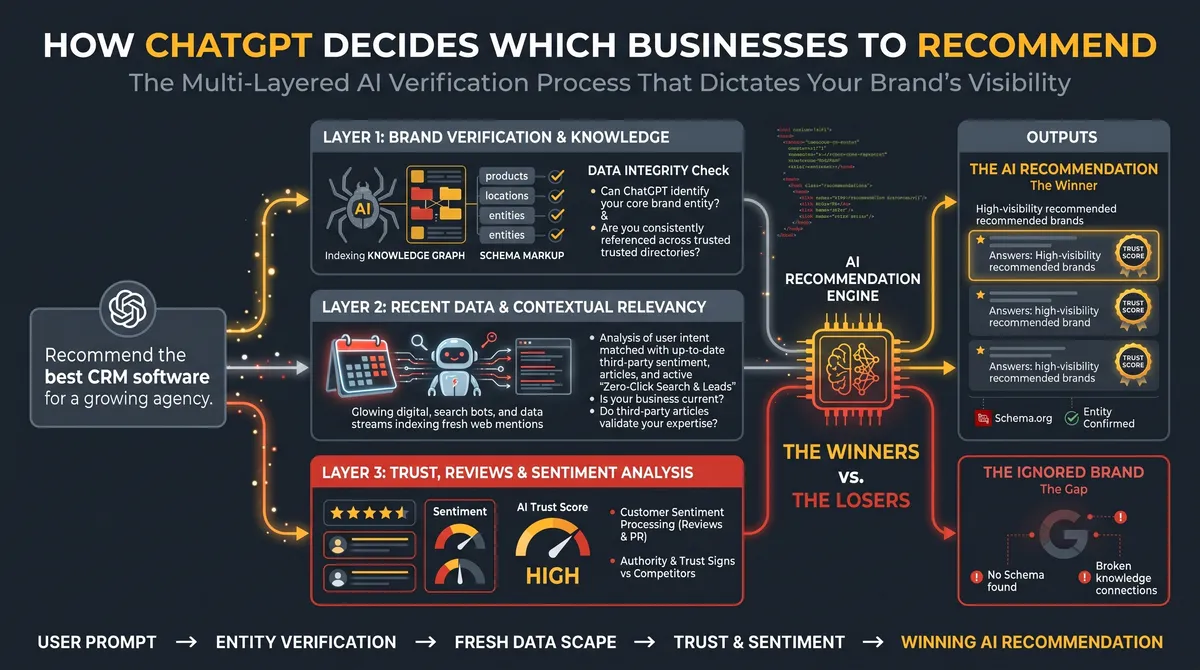
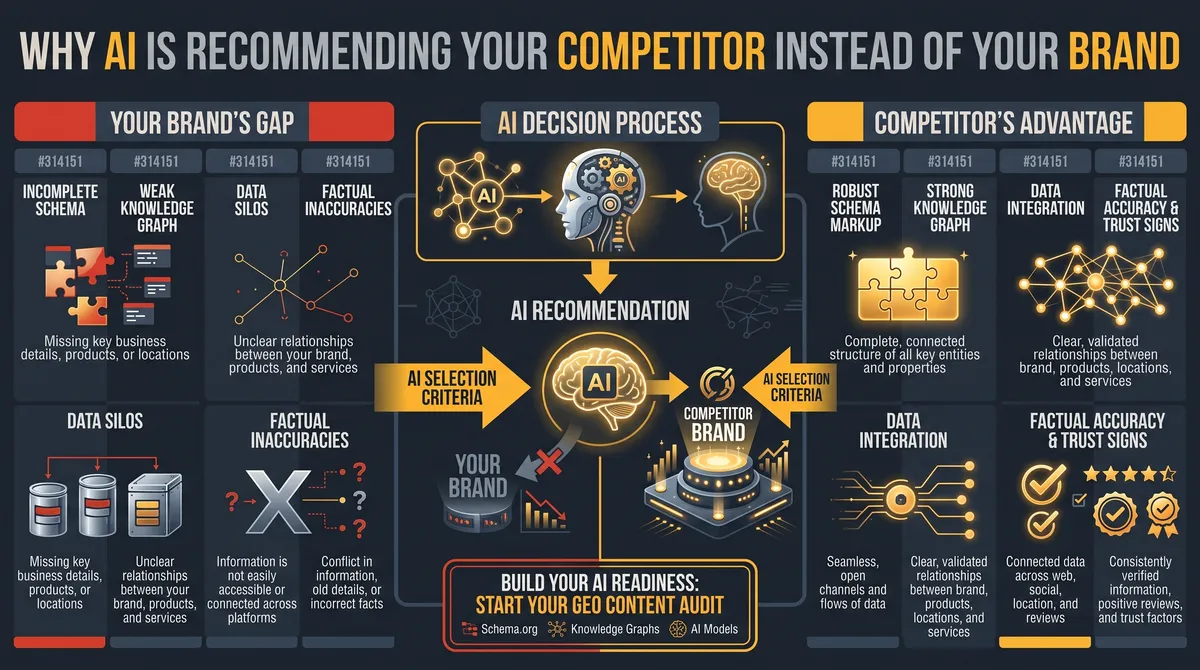
AI visibility is not mature. Most brands currently have a weak or effectively absent presence in AI answers regardless of how strong their search performance is, because the two are built on different signals. Which means building entity clarity and citation-worthy content now is not fighting for scraps in a crowded field. It is claiming ground in one that is still mostly open.
Early presence compounds. Each citation reinforces the pattern the model has already formed about you.
That is the part worth sitting with. AI systems build their picture of an entity over time from accumulated signals, so brands cited consistently now are more likely to keep being cited. It is closer to reputation than to ranking, and reputation has always been easier to build before somebody else built theirs.
Your report might be measuring a shrinking share of reality
Think about what your monthly or quarterly report actually contains. Rankings, organic traffic, some conversion data. All genuinely useful.
Now consider where buyer research is going.
Half of US consumers surveyed now intentionally use AI-powered search
44% of those AI search users call it their primary and preferred source of insight, ahead of traditional search at 31%
McKinsey AI Discovery Survey, August 2025, representative US consumer panel, n=1,927
Read the second number carefully, because it gets misquoted constantly and usually in the direction that flatters the argument. It is 44 percent of people who use AI search, not 44 percent of everybody. Since about half of consumers use it at all, the figure across the whole population is closer to one in five.
One in five is still a great deal of buying research happening somewhere your report does not look, and in top consumer categories McKinsey put usage for purchasing decisions between 40 and 55 percent. A report that never addresses AI visibility is not capturing a meaningful and growing part of the picture.
This does not mean your agency is doing bad work. It may mean the work is good by the standards the report measures, and the report has not been updated for a shift that only became measurable in the last year or two. Those are different problems with different conversations attached.
Both readings point at the same first move
Whichever interpretation resonates, one action makes sense before any other. Get the measurement.
- If it is an opportunity, the measurement shows you exactly where the empty space sits and which part of it you can occupy first.
- If it is a warning, the measurement shows you how large the blind spot is and precisely what is inside it.
You cannot make a sound decision about how much to prioritize this without knowing where you stand. And right now most businesses do not know, because nobody has been measuring it as part of ordinary reporting.
That is a strange position for an industry to be in, and it is temporary. It is also, for the moment, useful to you.