Why Marketing Campaigns Fail: The Persona Problem
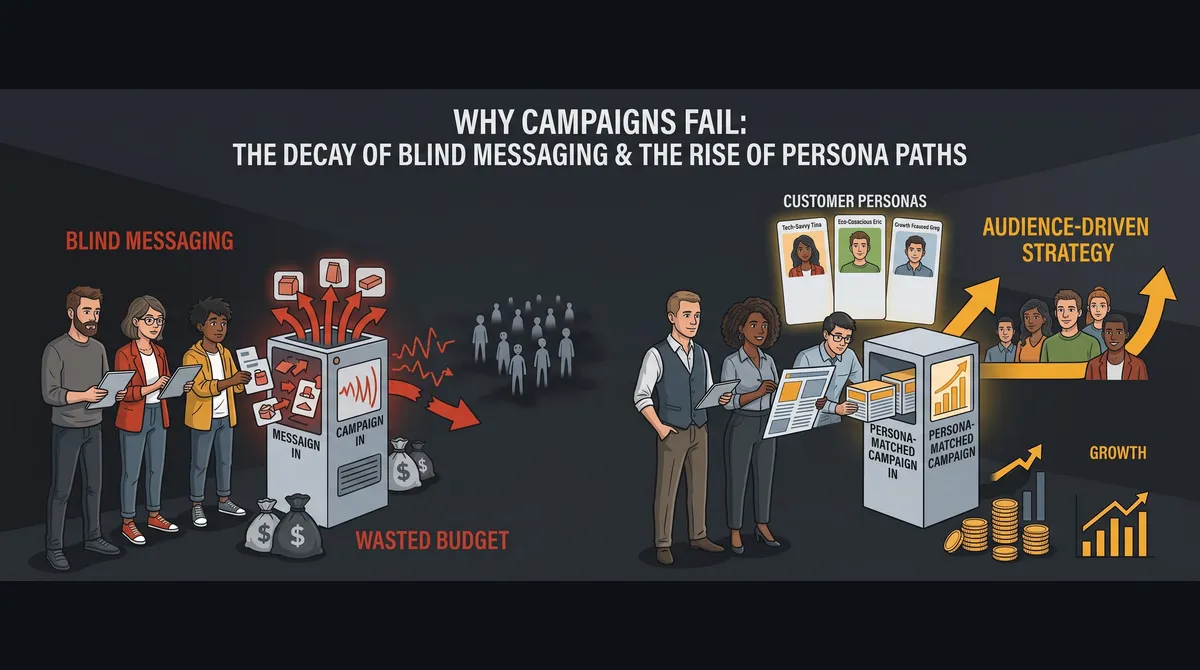
The budget was not too small. The creative was not too weak. The launch was not mistimed. In most underperforming campaigns, the real failure happened before anyone opened a design file.

Updated 5 min read
In short
What a marketing persona actually is
Not a made-up character. Not a gut feeling about who buys from you. A persona is a real, data-backed representation of the people most likely to engage, convert, and stay.
Done right, it answers four questions before a campaign starts.
- Who you are talking to. Demographics, firmographics, life stage, role, and buying authority.
- What they care about. Values, fears, goals, and the pressure that moves them to act.
- Where they spend time. Platforms, content formats, and how they discover a solution in the first place.
- Why they buy, and why they do not. The objection is as valuable as the motivator.
What skipping persona work actually costs
Plainly: large budgets produce embarrassing results when no one on the team can answer the question, "who exactly are we talking to?"
Every assumption in the left column below has a price. Here is what it buys you.
| The assumption | What it actually buys you |
|---|---|
| "Our buyer is on LinkedIn" | Spend on a platform your actual buyer has not opened in years, while the audience that would have converted never saw the offer. |
| "They will read the white paper" | A long-form asset built for a corporate committee, aimed at an owner who would rather watch a 60 second clip between job sites. |
| "Target the 25 to 54 range" | A wide net that raises cost per acquisition on every impression served to someone who was never going to buy. |
| "Anyone could use this" | Copy so general it reads as promotional noise. It offends nobody and it moves nobody. |
Worth knowing: the waste is rarely one bad decision. It compounds. A wrong persona misroutes the channel, which misshapes the creative, which mismatches the landing page, which drags the whole funnel down at once.
What changes when the persona is right
Channel selection stops being a debate and becomes obvious. Messaging stops being a committee decision and becomes a direct conversation. Creative stops being a style preference and becomes a strategic choice anchored to a real human being.
At Conspicuouz Creative Group (CCG), every campaign starts with the persona brief. Not the budget. Not the platform. The person. That order is deliberate, and it is the reason the work holds up in month three instead of stalling in week two.
Get the persona right and you stop shouting into the void. You start having a conversation. Conversations convert.
Ask this before you write a single line of copy
Before the channel. Before the budget. Before anyone opens a design file.
If this campaign were a letter, who would you address it to?
If the answer is "business owners" or "people interested in fitness" or "church members," you do not have a persona yet. You have a category. And nobody has ever written a letter to a category.
The difference between a persona and a category is specificity. Specificity is what makes marketing feel personal instead of promotional.
AI search rewards content built around real questions
AI-powered search surfaces, Google AI Overviews, ChatGPT, Perplexity, and the assistants built into browsers, changed the job of a web page. They do not simply index and rank documents. They answer questions, then cite whoever answered best.
That means your blog posts, landing pages, and service pages need to be structured around the questions your buyer is actually asking. Not the keywords that sound good in a planning document. The real ones. The question they type at eleven at night when they are frustrated and looking for a straight answer.
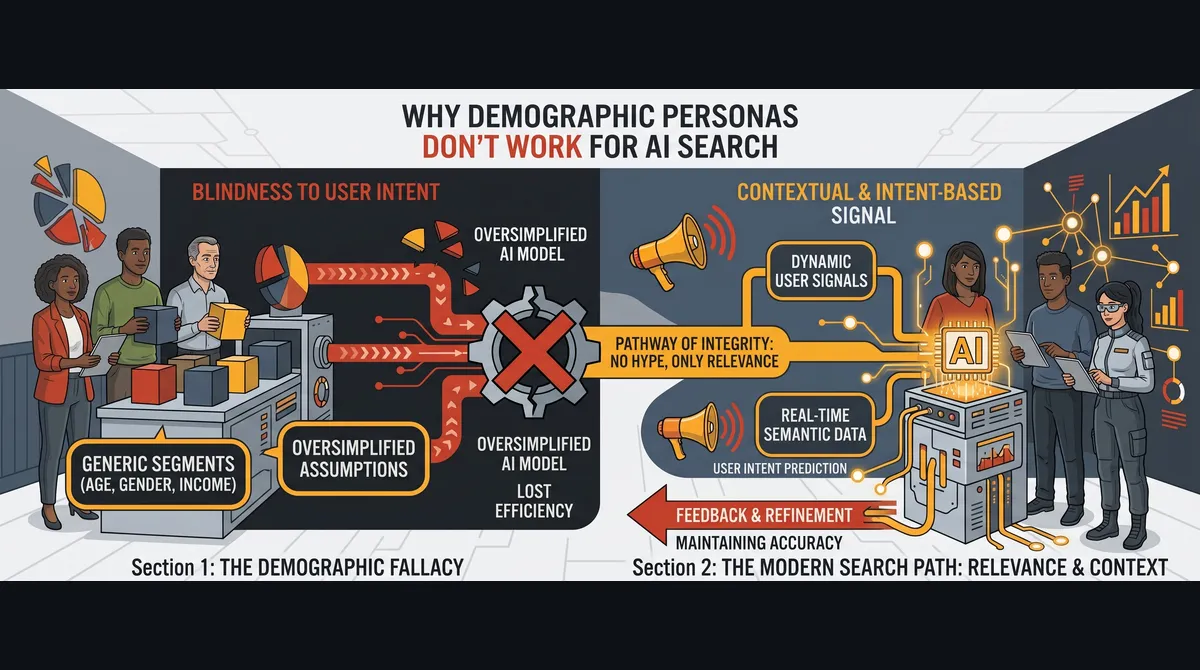
Persona development is what makes that possible. You cannot answer the right questions if you do not know who is asking them. This is the point where persona work stops being a marketing exercise and starts being a visibility requirement.
This is a foundation, not a checkbox
Persona development is not a one-hour brainstorm you knock out before the fun part. It is the ground your entire strategy stands on. Get it right and campaigns get sharper, cheaper, and more effective. Skip it and you are throwing darts in a dark room, hoping something lands.
You cannot skip the foundation and expect the building to stand.
What the rest of this series covers
The next five posts walk the exact framework used at CCG to build personas that hold up under a real budget.
- Research methods. Where real persona data comes from when you do not have a research budget.
- Demographic and psychographic mapping. Turning raw research into a profile a copywriter can use.
- The pain-to-goal journey. Mapping the path from the problem they feel to the outcome they want.
- Validation. How to prove a persona is real before you spend against it.
- Campaign application. Connecting the persona to channel selection, budget allocation, and creative direction.