Google vs. AI Visibility: Why Ranking #1 Isn’t Enough
You built your marketing on a simple premise: if you rank, you get found. For a decade that held. It is now only half true, and the half that broke is the half nobody is measuring.

Updated 5 min read
In short
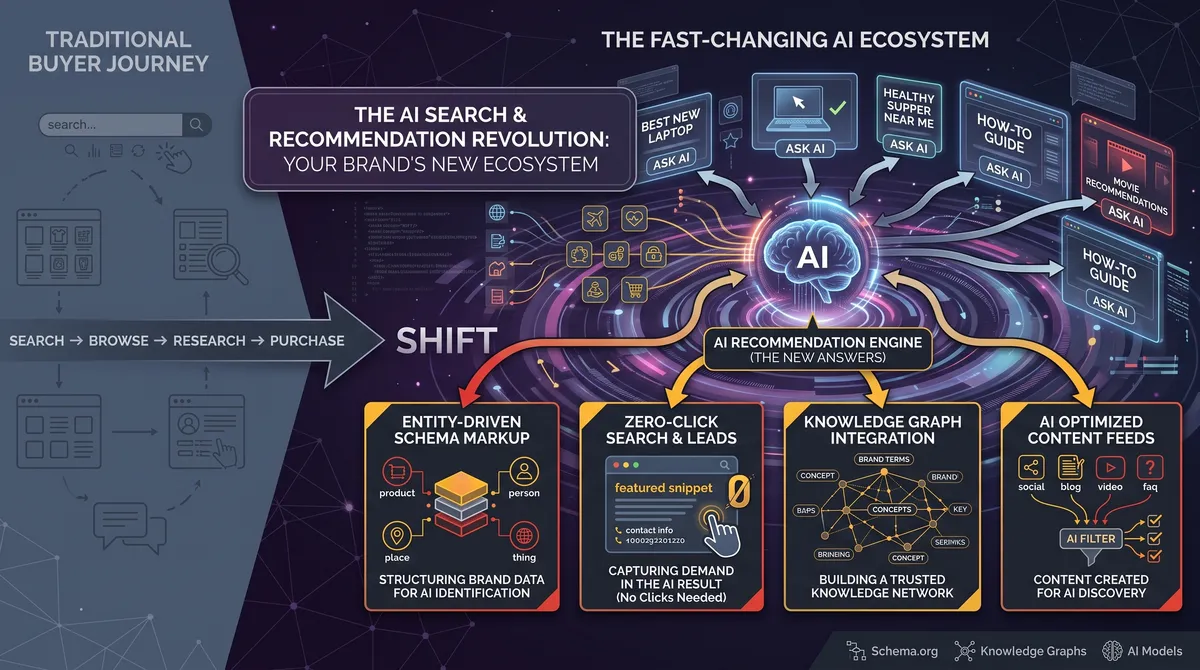
Your buyer used to search. Now your buyer asks.
Instead of typing three keywords and scanning ten links, your buyer opens an assistant and asks a full question. What is the best marketing agency in Southern California for a mid-sized company. Who should I hire for video production if my audience is faith-based.
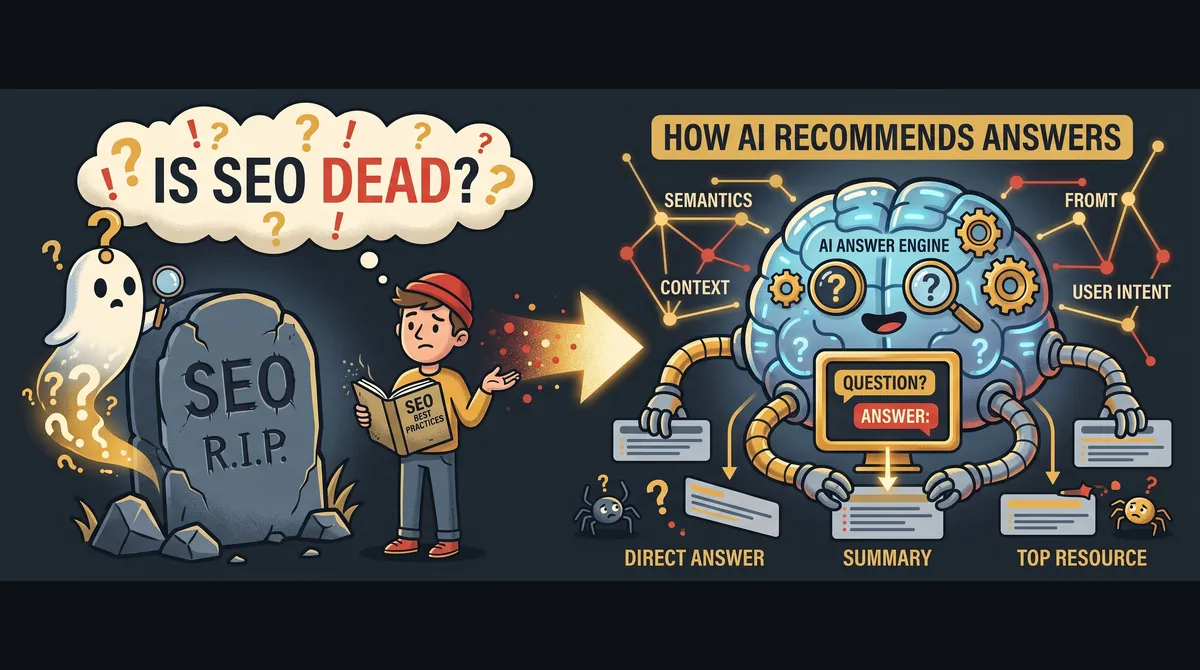
The engine answers. Confidently. With names. You may not be among them, even if you hold the top spot on Google for that exact query.
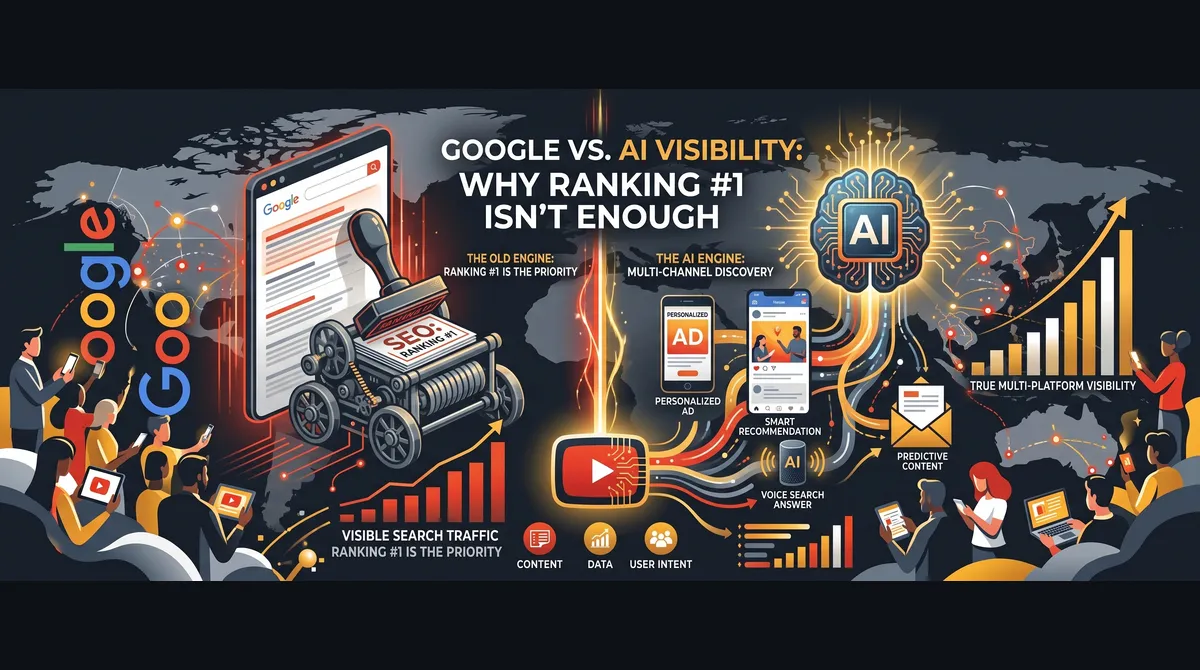
Two conversations are happening in your market. One on Google, one inside the assistants. If you measure only one, you know half of what is true about your visibility.
And you did not lose the ranking. You lost the click, because the answer arrived before your page was ever opened.
What the measurement actually shows
Four figures, each from a different study, all pointing the same direction. The last one is the one that should change how you plan.
| Figure | What it measures | Source |
|---|---|---|
| 68% | of US Google searches end without a click to the open web. | SparkToro with Similarweb clickstream data, first four months of 2026 |
| 83% | average zero-click rate on queries where an AI Overview appears, against roughly 60% on traditional queries. | Similarweb, 2025 |
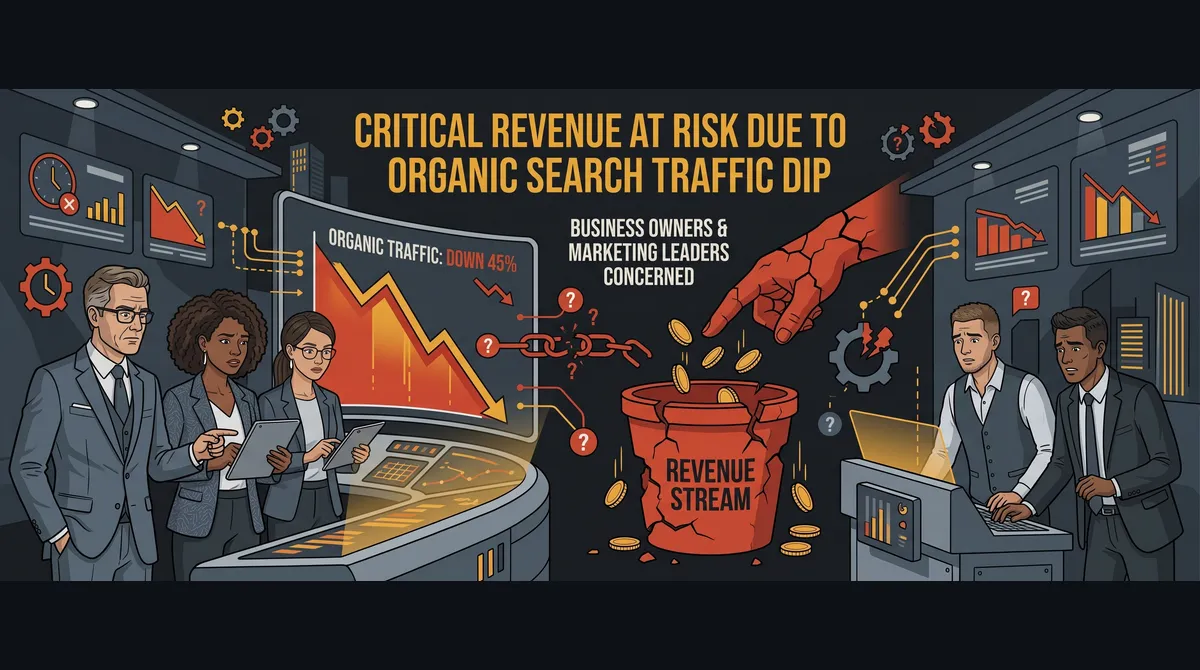
| 15 to 25% | estimated organic traffic decline across many sectors. Individual cases ran far steeper, with one well-known marketing site losing 70 to 80% between late 2024 and 2025. | Bain & Company, February 2025 |
| 17% | of AI Overview citations come from pages ranking in Google's organic top ten, and that figure has held flat for months. | BrightEdge, February 2026 |
Sit with the last row. More than four out of five AI citations go to pages that are not in Google's top ten results. Ranking first is not the mechanism by which you get cited. It is a different mechanism entirely, running on the same screen.
Two scoring systems, evaluating different things
Here is why this catches good marketers off guard. Google and AI engines assess you on completely different foundations, and the work that wins one does not automatically register in the other.
| How Google sees you | How AI engines see you | |
|---|---|---|
| What it evaluates | Your website. | Your entire online presence. |
| Signals it reads | Page speed, backlinks, content depth, schema, crawlability. | Mentions in publications, forum threads, third-party reviews, citations by others, entity clarity. |
| What winning requires | A page strong enough to outrank the alternatives. | Being a recognized, trusted entity in your category. |
| Where the work happens | On your site, which you control completely. | Everywhere else your brand is discussed, most of which you do not control at all. |
A brand can hold the top spot on Google and never once surface in an AI recommendation. That is not a contradiction. It is two scoring systems, and most businesses have only ever optimized for one of them.
This is not a criticism of the search work you have already done. That investment built something real: domain authority, content depth, technical foundation. None of it is wasted, and all of it still matters. The definition of visible simply got wider, and most brands have not measured the new territory yet.
Three questions, in this order
You cannot close a gap you have not measured, and you cannot measure what you have not defined. Start here, and keep the sequence, because each answer changes what the next one means.
Where do you stand in the AI conversation?
Not whether you rank. Specifically: when someone asks an assistant a category-level question about your industry, does your name come up, and how does that compare with your top three competitors against the identical prompt? Test several phrasings, because the answer often changes with the wording.
Is the representation accurate?
Appearing is not the same as appearing correctly. These systems synthesize scattered mentions into a single judgment. If the underlying information is outdated, incomplete, or wrong, the engine will repeat that error confidently to your next prospect, and it will sound authoritative doing it.
Is your content structured to be extracted?
These engines can only cite what they can cleanly lift. Beautiful content that is not structured for machine reading, meaning clear headers, real tables, schema markup, and direct answers to direct questions, gets passed over in favor of a competitor's messier but more parsable page. That is an uncomfortable thing to be beaten by, and it happens constantly.
Diagnosis before prescription
Prescribing before diagnosing is malpractice. Content strategy before research is the same category of error.
Before you write another post, brief another agency, or spend another dollar on paid media, know where you actually stand in both conversations. The one on Google, and the one happening right now inside the tools your buyers already trust.
One question worth answering honestly before you go further. If someone asked an assistant about your category today, where do you think you would stand? The uncomfortable part is that most owners have a confident guess and no way to check it.