Is SEO Dead in 2026? What the Citation Data Says
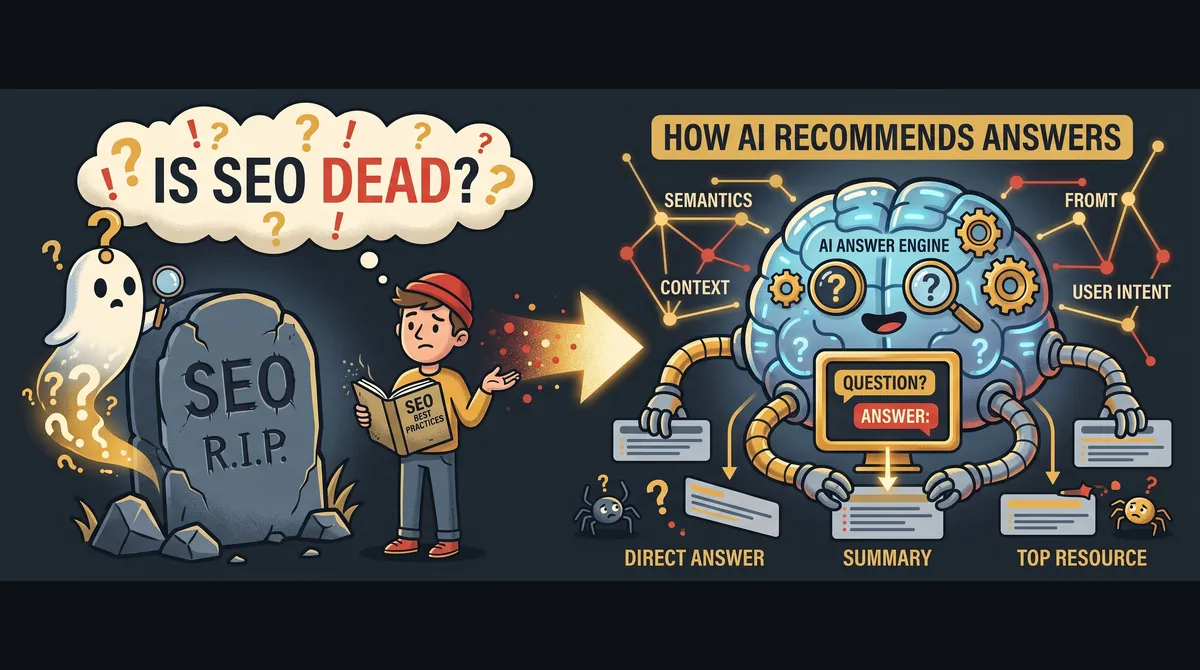
Killing your SEO program is a budget decision that feels decisive and produces a measurable loss. The correct move is to add a second scoreboard, not to burn the first one.

5 min read
In short
What actually changed?
Two things, and they point in different directions.
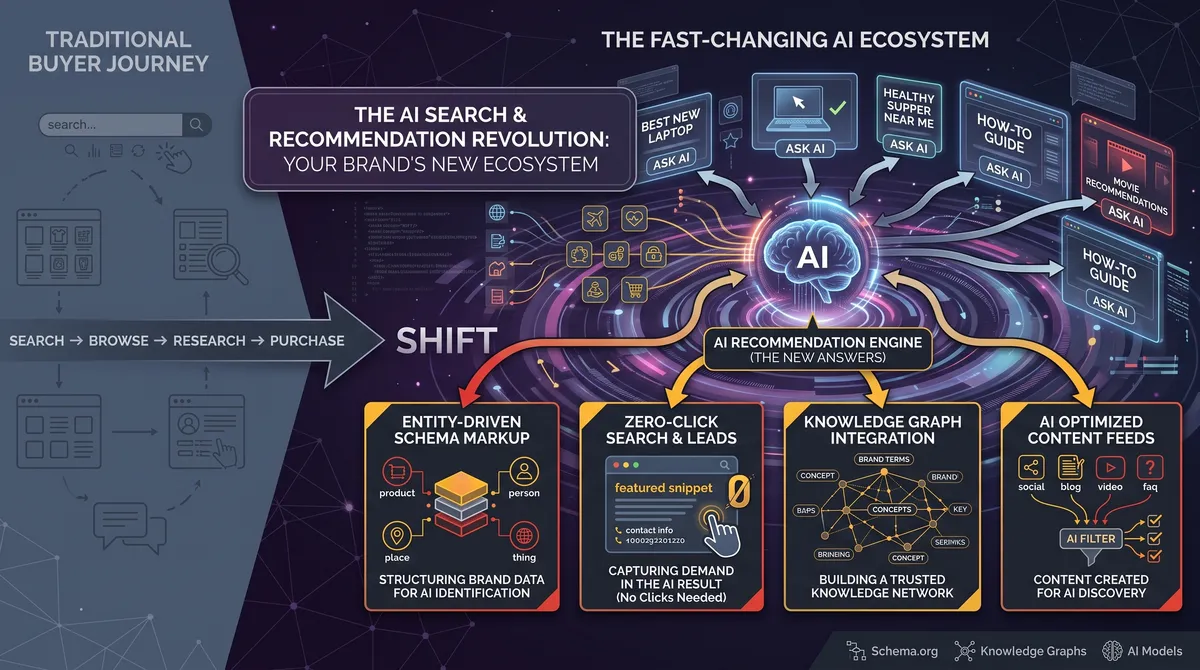
Interest in SEO as a topic peaked in mid-2025 and has contracted roughly 30 percent since, according to a Rankability panel analysis of 3,751 keywords tracked across 48 months of Google Keyword Planner data, from June 2022 through May 2026. Over the same window, AI-search demand ran at roughly 3.6 times its 2022 level and was still growing about 85 percent year over year.
At the buyer level, G2's Answer Economy survey of 1,076 business-to-business buyers in March 2026 found 51 percent now start their research in an AI chatbot rather than a search engine, up from 29 percent eleven months earlier. Seventy-one percent use AI chatbots at some point in the research process. And 69 percent said they chose a different vendor than they had planned because of AI guidance.
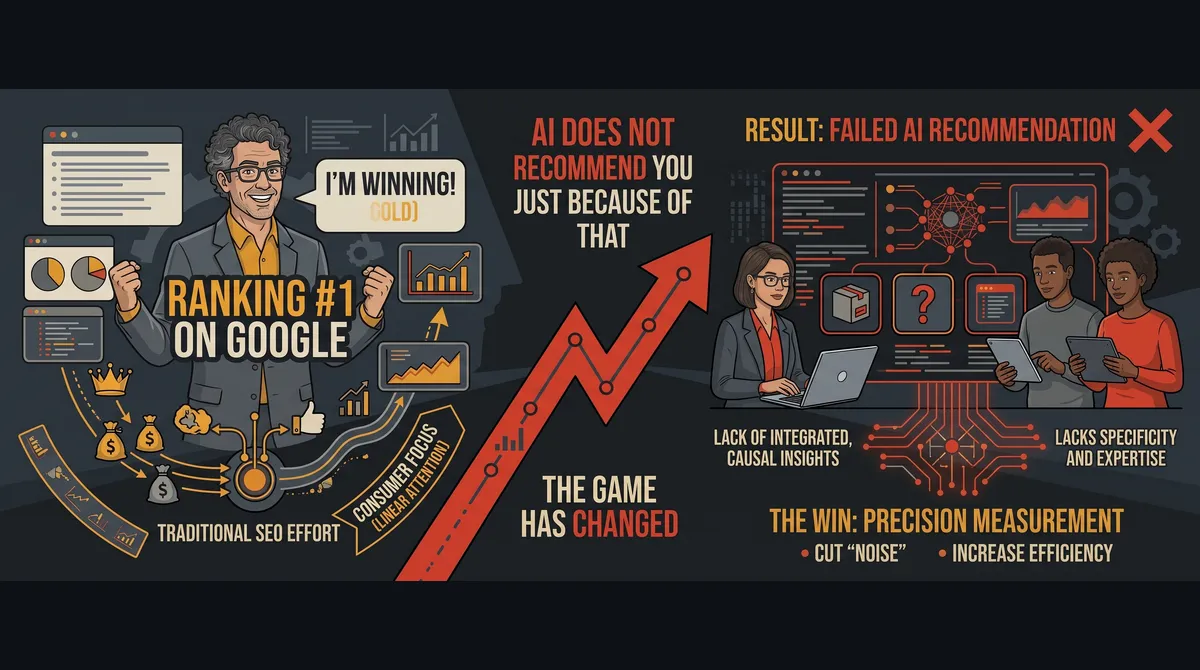
That is a genuine shift in where the first impression happens. It is not evidence that ranking stopped mattering.
Why ranking still matters, even for AI visibility
Because one of the largest AI surfaces is built on top of the search index you already compete in.
Google AI Overviews favor content already performing in Google search. That is the mechanism, not a theory, and Google's own published guidance says so directly, stating that search best practices remain relevant because its generative features are rooted in the same core ranking and quality systems.
If your pages have no organic footing, they are not in the candidate pool for the AI summary sitting above the results they would have appeared in. Dismantling the SEO program to fund GEO reduces your presence in the exact surface with the largest reach.
There is also a quieter reason. The technical work SEO teams have been doing for years, clean crawlability, sensible information architecture, valid structured data, fast rendering, is the same infrastructure GEO depends on. It transfers. Very little of it was wasted.
Where the two scoreboards genuinely separate
Here is the part that should change your reporting, and it is the strongest evidence in the whole argument.
About 17% AI Overview citations coming from Google's organic top ten
Down from roughly 76 percent a year earlier
BrightEdge, February 2026. Ahrefs measured the earlier figure in mid-2025.
And authority metrics do not rescue the connection. In the Semrush category study run by Kevin Indig across 1,094 US categories from January to June 2026, covering more than 50,000 brands and 600,000 citations, Authority Score predicted category ownership 52.5 percent of the time and organic traffic 48.4 percent. Two coin flips. Indig's own conclusion: "traditional SEO metrics aren't enough to explain who owns a topic."
A rankings report tells you about rankings. It does not tell you whether you appear in the answer your buyer read before they ever saw a results page.
If AI answers are taking the clicks, why fund the channel losing them?
Because the two are not separate budgets competing for the same outcome. They are one visibility program measured two ways.
Roughly 82 percent of AI citations come from earned media, per Muck Rack's December 2025 analysis. Roughly 77 percent of sources cited about a brand are off-page, per Omniscient Digital's review of more than 23,000 citations. The work that produces those citations, credible content worth referencing, coverage, clean entity data, is the same work that produces organic authority.
You are not funding two machines. You are funding one machine and reading two gauges.
The honest version of the reallocation: keep technical SEO and content quality funded, stop funding volume-based content production, and move that money into citation supply and extractable structure.
What to do differently
- Keep the technical foundation funded. Crawlability, schema, site speed, internal linking. It serves both.
- Stop paying for volume. Word count is not among the levers that move citations. Peer-reviewed work presented at KDD 2024 found adding specific statistics produced the largest single lift, followed by citing primary sources and adding attributed quotations.
- Add a second gauge. Track share of model and citation rate alongside rank and sessions. Report monthly, because AI freshness cycles run near 70 days.
- Fix crawler access first. Confirm GPTBot, OAI-SearchBot, Google-Extended, PerplexityBot, ClaudeBot, and Bingbot are not disallowed in robots.txt. It costs nothing.
- Move budget into citation supply. Original data, coverage, and third-party corroboration outperform another ten blog posts at the same depth.
SEO did not die. It got a second scoreboard, and most brands are still only reading the first one.