Your Rankings Are Up. Your Traffic Is Down. Here’s the Math Nobody’s Explaining to You.
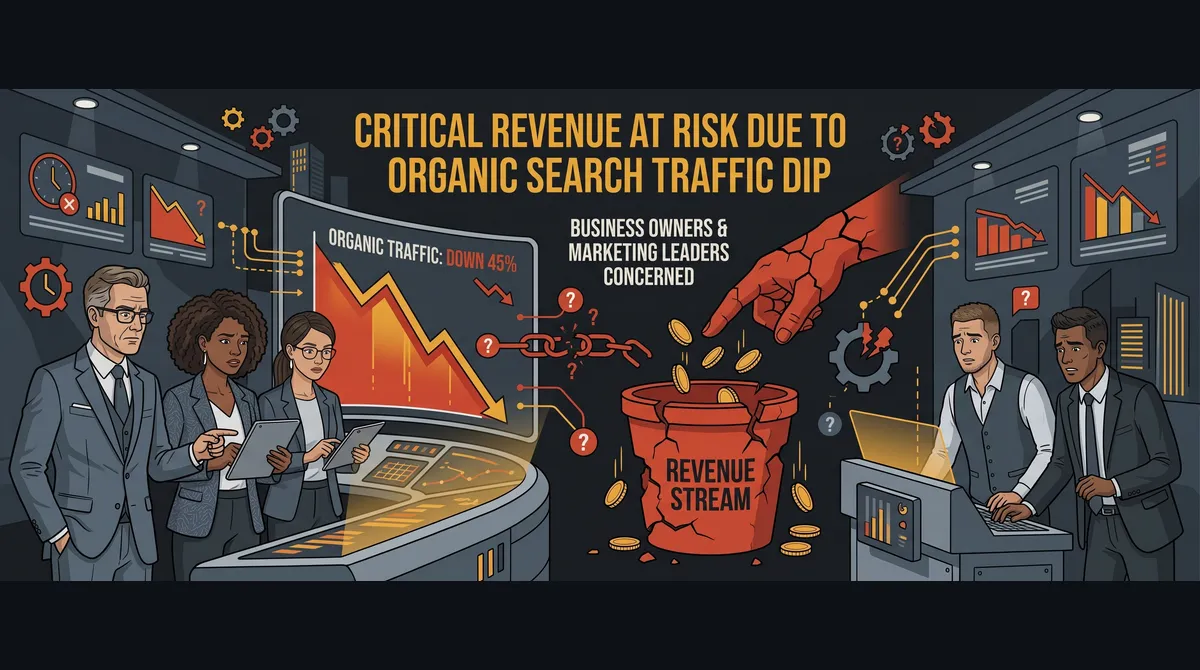
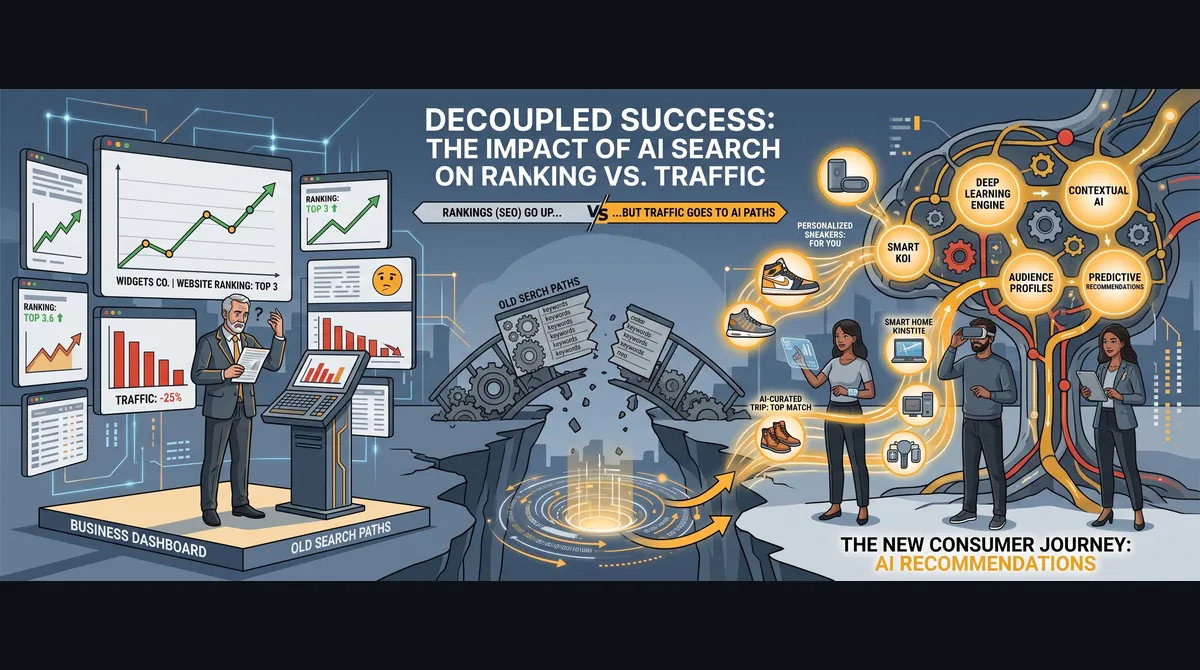
Rankings stable or improving. Organic traffic down, sometimes sharply. It does not make sense on its face, and the instinct is to suspect the tracking, the content, or the site. It is usually none of those.

Updated 7 min read
In short
Open your report and find your pattern
Before any explanation, identify which of these you are actually looking at, because they mean different things and only one of them is the pattern this post is about.
| Impressions | Clicks | Rankings | What it means |
|---|---|---|---|
| Up or flat | Down | Stable or better | The pattern this post explains. The answer is being served before the click. Not a content problem. |
| Down | Down | Down | A conventional visibility problem. Diagnose it the conventional way before blaming AI. |
| Down | Down | Stable | Demand shifted, or queries moved elsewhere. Check search volume for your terms before anything else. |
| Up | Up | Stable or better | Working as intended. Worth still testing AI visibility separately, since it is a different score. |
If you are in row one, keep reading. The explanation is not a mystery anymore. It is simply not reaching most marketing dashboards yet.
The number that explains the gap
Seer Interactive analyzed 3,119 informational queries across 42 organizations, covering 25.1 million organic impressions between June 2024 and September 2025. Two findings, and the second one is the surprising one.
-61% organic click-through on informational queries with an AI Overview, falling from 1.76% to 0.61%
-41% organic click-through on queries without an AI Overview at all
Seer Interactive, AIO Impact on Google CTR, September 2025
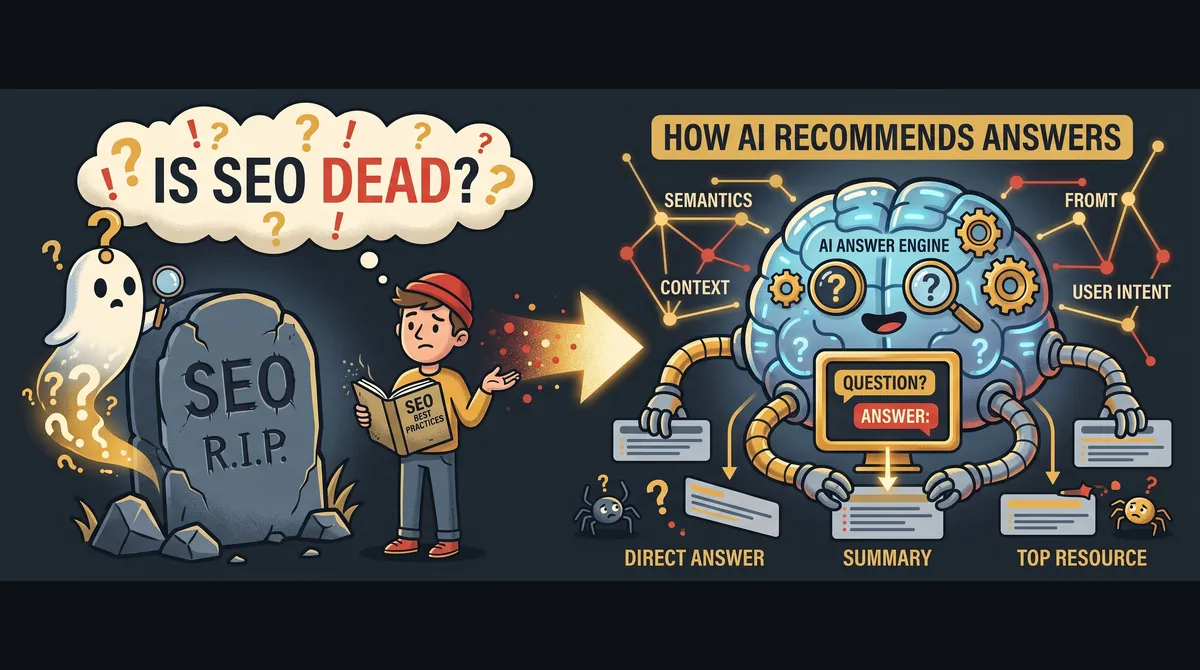
The first number is the one everyone quotes. Google's AI Overview answers the question at the top of the page, before anyone scrolls to the organic results. The user gets what they came for. The page that won the ranking still loses the visit.
The second number is the one that should change how you think about it. Clicks are also down 41% on queries where no AI Overview appears at all. Which rules out the comfortable objection that this only affects queries you do not care about. People are clicking less everywhere, likely because they are getting answers from assistants and other surfaces before they ever reach a results page.
One precision note, because this figure gets misquoted constantly. The 61% is organic click-through across informational queries where an AI Overview appears. It is not a position-one figure.
Ahrefs measured the position-one number separately at roughly a 58% drop when an AI Overview is present, updated December 2025. Both are severe. They are different measurements, and citing one as the other is the sort of thing a skeptical reader catches.
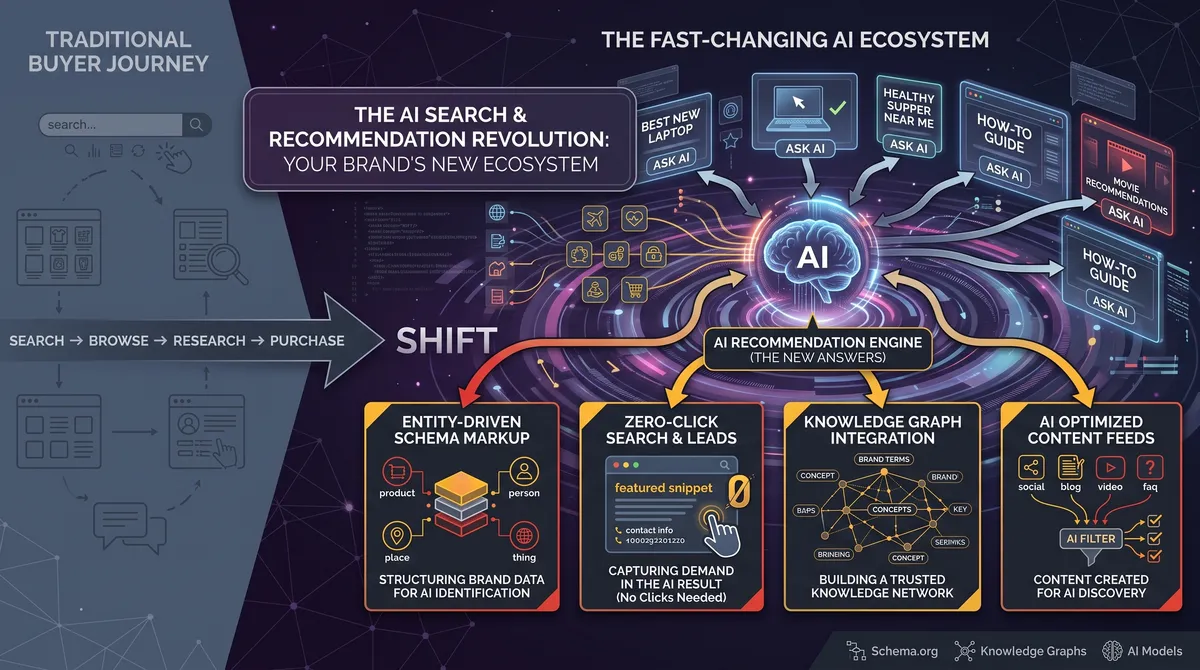
And this is not a rare occurrence. Ahrefs found that nearly all informational keywords now trigger an AI Overview. Meanwhile Semrush measured a 93% zero-click rate in Google's AI Mode, which replaces the results page entirely rather than sitting above it.
What the arithmetic looks like on your own numbers
Clicks equal impressions multiplied by click-through rate. That is the whole equation, and it is why the pattern feels contradictory until you write it down.
Take a page whose impressions rose 25 percent over a year, which is a genuinely good outcome and evidence the ranking work succeeded. Now apply a 61 percent fall in click-through.
The arithmetic
Impressions: up 25% → a multiplier of 1.25
Click-through: down 61% → a multiplier of 0.39
1.25 × 0.39 = 0.49
Traffic roughly halves, while every visibility metric on the report improves.
More visibility. Fewer visitors. Better rankings. Worse traffic. Nothing broke, and no amount of auditing the content will find the cause, because the cause is not on your website.
Do this with your own figures before your next reporting meeting. Two numbers from Search Console, one multiplication, and you can explain a year of declining traffic in a single sentence that does not sound like an excuse.
The traffic decline is the smaller problem
This is the part that gets missed. Everything above is at least measurable. You can see impressions holding and clicks falling, and once you know what causes it, you can explain it.
On the assistants themselves, ChatGPT, Perplexity, Gemini, there is no click to measure at all, ever. When somebody asks a question and gets an answer with a brand name in it, that interaction does not appear in Search Console. It does not appear in your analytics. It is entirely invisible to your existing reporting.
Two visibility gaps stacked on top of each other, and only one of them shows up in any report you have ever seen.
Which is why the falling traffic number, frustrating as it is, is the visible half of the problem rather than the whole of it.
Ranking well used to be a decent proxy. It is not anymore.
~76% → about 17% overlap between top Google rankings and AI-cited brands
Mid-2025 to early 2026, in roughly a year
Ahrefs, July 2025, for the earlier figure. BrightEdge, February 2026, for the current one.
Less than a year ago, a strong ranking was a reasonable proxy for AI visibility too. That is no longer true, and BrightEdge put a sharper point on it in February 2026: only around 17 percent of AI Overview citations come from pages ranking in Google's organic top ten. More than four in five citations go somewhere else entirely.
One honest caveat, since this post is about reading numbers correctly. The divergence is not uniform. Google's own AI Overviews still overlap substantially with Google's rankings, which makes sense given they run on shared systems. The sharp separation is on the platforms Google does not operate, and those are the ones growing fastest.
And here is where the clicks actually went. Seer found that brands cited inside an AI Overview earn roughly 35 percent higher organic click-through than uncited brands on the same results page, for the same query.
So clicks are not simply evaporating. They are consolidating around whoever gets named. That is what makes this a problem worth solving rather than a condition to accept.
Three steps, in this order
Do not tear up the search strategy
The foundation still matters. Google search is not going away, ranking well still has value, and the technical and content work behind those rankings supports AI visibility as well. Panic-rebuilding a strategy that is working is the expensive version of this mistake.
Change what you report on
If clicks are structurally suppressed, reporting clicks as the headline number tells a misleading story about work that is actually succeeding. Lead with impressions and share of voice, report click-through as context, and note whether the query carried an AI Overview.
Get the second score
Rankings and AI visibility are now two separate measurements, and you almost certainly have only one. The second requires a different test: querying ChatGPT, Perplexity, and Gemini with the questions your buyers would ask, and documenting what comes back. You cannot close a gap you cannot see.